
Posted in Uncategorized
Canada Goose Real vs Fake: The Hologram, Fur Ruff, and 9 More Checks
by admin
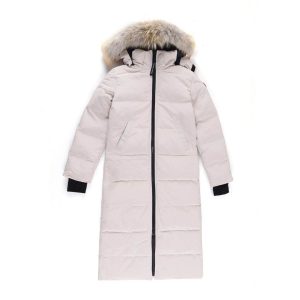

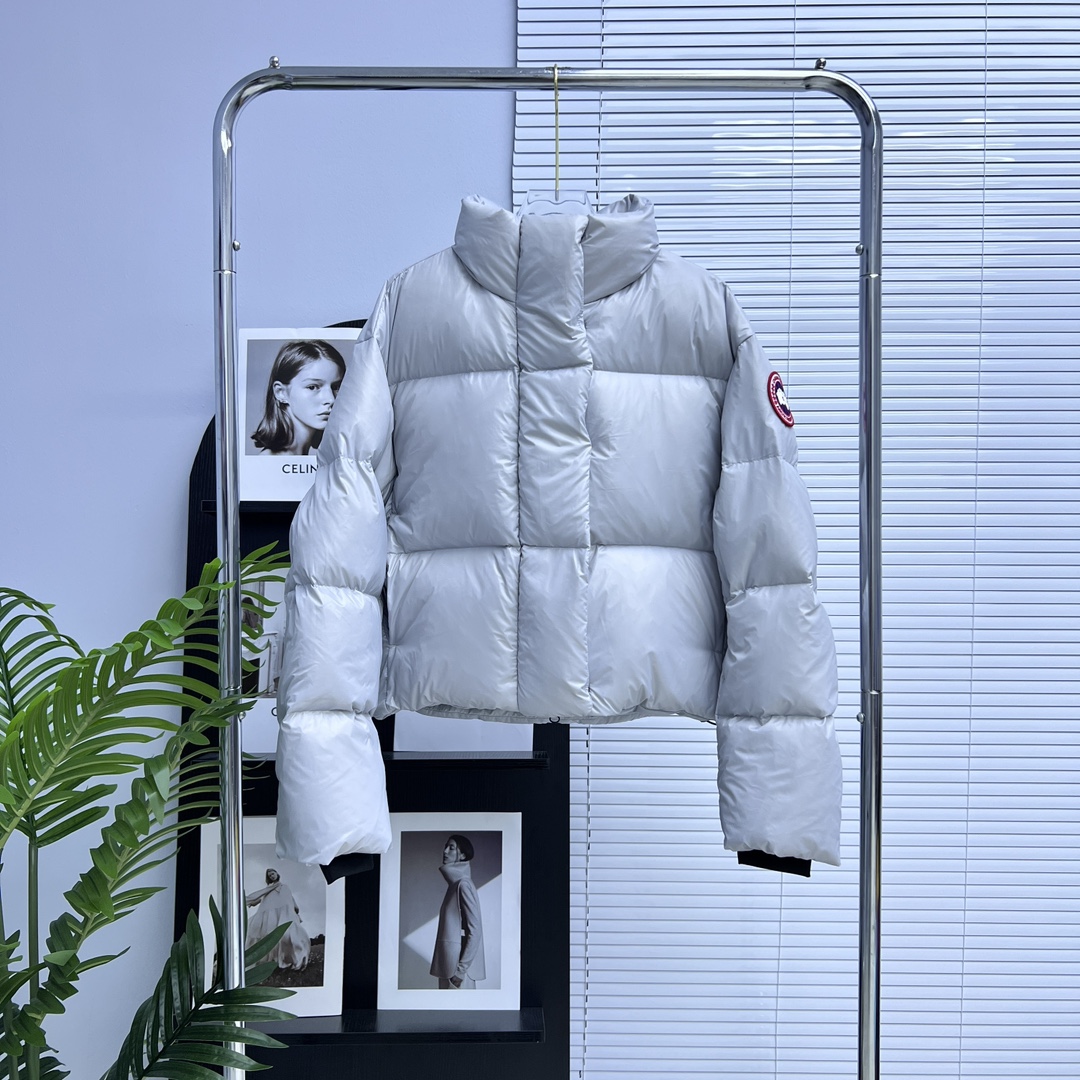

Updated for 2025. A detailed guide covering 11 authentication checks to help you distinguish a genuine Canada Goose parka from a replica.
Canada Goose parkas are one of the most counterfeited outerwear items on the market. The combination of a high price tag — Expeditions start around $1,550 — and widespread demand makes them a prime target for replica manufacturers. If you’re buying secondhand, from a marketplace, or from any seller that isn’t an authorized retailer, knowing how to spot a fake Canada Goose is the difference between a parka that performs at -30°C and one that falls apart in its first real snow.
This guide walks through 11 specific checks, ordered from the hardest to fake to the subtler tells. Start with the hologram — it’s the most reliable single check — and work your way through.
Table of Contents
- The Hologram Tag
- Arctic Disc Patch
- Fur Ruff Quality
- Down Fill & Warmth
- Zipper Hardware (YKK)
- Stitching Quality
- Care Label Details
- Country of Origin
- Price Reality Check
- Packaging & Tags
- Where to Buy Authentic
1. The Hologram Tag
Since 2011, every authentic Canada Goose jacket has included a woven holographic tag sewn into the interior lining — usually near the care labels or inside a pocket. This is the single most reliable authentication point. On an authentic jacket:- The hologram shifts between a polar bear silhouette and the Canada Goose brand mark when you tilt it under light
- The background is a clean metallic silver, not rainbow or overly colorful
- The tag has a unique alphanumeric serial code printed in clear black text, not smudged or faint
- The edges are cleanly woven, not frayed or melted
- The hologram effect is either absent (a flat printed sticker) or looks cheap — rainbow glare, smeared bear image, no polar bear at all
- The serial code may be missing entirely, or all jackets from a seller share the same code
- The tag material feels like paper or cheap plastic rather than woven fabric
- The edges may be heat-cut (a clear sign of rapid manufacturing) rather than woven into the lining
2. Arctic Disc Patch
The circular Arctic Disc patch on the left sleeve is the most visible brand marker. It’s also one of the most commonly faked elements — and one where replicas have gotten much better in recent years. On an authentic jacket:- The red, white, and blue embroidery is dense and tight — you should not see the black backing fabric between the stitches
- The outer blue ring has sharp, clean text reading “CANADA GOOSE” with the registered trademark symbol (®) centered and small
- The central white shape is meant to represent the Arctic Circle with longitude/latitude-like lines — the details should be crisp, not blobby
- The stitching around the edge of the patch is a clean circular run with consistent thread tension
- Thread density is noticeably lower — you can see black fabric between stitches
- The letters in “CANADA GOOSE” may be unevenly spaced, the wrong font weight, or missing the ® symbol
- The white center design often looks mushy or asymmetrical
- Cheap replicas use a printed-on patch rather than embroidery — it peels off after a season
3. Fur Ruff Quality
Canada Goose uses genuine coyote fur on the ruff of most parka models. This is both a functional choice (coyote fur doesn’t freeze when moisture from your breath hits it) and an ethical one that’s part of the brand’s identity. On an authentic jacket:- The fur is dense, full, and has natural color variation — blond, brown, grey, and black tones mixed in a single ruff
- Individual guard hairs are long and coarse, with a soft undercoat
- The fur ruff is heavy and substantial — it droops slightly when unzipped
- When you blow on it, the fur separates to reveal the leather backing, but individual strands don’t fall out easily
- Synthetic fur looks uniformly colored (one flat shade of brown or grey with no natural variation) and feels like polyester, not animal fur
- If it is real fur on a replica, it’s often thin, patchy, or uses cheaper fur sources with shorter guard hairs
- The fur may be unnaturally white or unnaturally uniform, lacking the spectrum of tones found in wild coyote
- Some newer Canada Goose models use synthetic fur by design (the brand has introduced fur-free options). Check the model specs — if a seller claims genuine fur on a model that was released fur-free, that’s a red flag.
4. Down Fill & Warmth
Authentic Canada Goose jackets use a blend of duck down and feather with a fill power rating of 625. The result is substantial weight and warmth — an Expedition parka weighs roughly 2 kg (4.4 lbs). On an authentic jacket:- The jacket feels heavy when you pick it up — this is one of the quickest tells
- The down fill is evenly distributed through all baffles with no flat spots
- Baffles feel firmly packed, not thin or empty
- The jacket warms up within 30-60 seconds of putting it on
- The jacket feels light — sometimes half the weight of an authentic piece
- Uneven fill distribution: some baffles are full, others feel empty
- The fill itself may be polyester fiberfill instead of down, which is less compressible and doesn’t loft back up the same way
- The jacket never really “warms up” — fiberfill insulation has significantly lower thermal efficiency
5. Zipper Hardware (YKK)
Canada Goose uses YKK zippers exclusively. Every zipper on an authentic jacket is stamped with the “YKK” logo — the main front zip, pocket zips, and interior zips. On an authentic jacket:- Every zipper pull has “YKK” engraved or embossed on the slider
- The main front zipper is heavy-duty — it has physical weight and operates smoothly with no catching
- The zipper teeth are evenly spaced and sit flush when zipped
- The zipper tape (the fabric strip the teeth are attached to) is thick and stiff
- No YKK branding on the zipper sliders, or a different brand name (often Chinese-manufactured zippers)
- The zipper feels light, cheap, and grinds or catches during operation
- Zipper teeth are uneven or don’t fully mesh
- The zipper tape is thin and flimsy — it wrinkles and folds rather than lying flat
6. Stitching Quality
Canada Goose jackets are produced in Canada, where labor standards and quality control are higher than in the factories that produce most replicas. The stitching tells this story clearly. On an authentic jacket:- Stitches are consistent, tight, and straight — no wandering seams
- Thread tension is uniform throughout — no loose loops or pulled-tight puckering
- Double stitching on high-stress areas (shoulders, armholes, pocket edges)
- Thread color matches the shell fabric precisely — no visible contrast unless it’s a deliberate design element
- Uneven stitch spacing — areas that are tight in some spots and loose in others
- Wandering seams that curve off their intended line
- Thread color doesn’t quite match the shell fabric (often slightly too light or too dark)
- Loose threads hanging from seam ends — quality manufacturers trim these
7. Care Label Details
Canada Goose care labels are printed in three languages: English, French, and Simplified Chinese. The printing quality and information accuracy are consistent across all models. On an authentic jacket:- The care label is a substantial woven fabric tag, not a thin printed one
- Text is sharp and legible in all three languages with no typos
- The label includes the Canada Goose style number (e.g., “4565M” for the men’s Expedition)
- Care instructions specify: cold water, mild detergent, tumble dry low with tennis balls — exactly what you’d expect for a down jacket
- Labels are often thin printed polyester that feels like paper
- Typos, grammar errors, or poorly translated text in the French and Chinese sections
- Care instructions may contradict what a genuine down parka needs (e.g., “dry clean only”)
- The style number is missing or doesn’t match any Canada Goose model when searched online
8. Country of Origin
Almost every Canada Goose jacket is made in Canada. There are a few exceptions — some accessories and lightweight pieces are made in other countries — but the core parka line is Canadian-made. On an authentic jacket:- The inner tag reads “Made in Canada” or “Fabriqué au Canada”
- The tag may specify a Canadian province (often Ontario, Manitoba, or Quebec)
- “Made in China,” “Made in Vietnam,” or “Made in Bangladesh” — none of these are correct for the core parka line
- Missing country-of-origin label entirely
- “Made in Canada” printed in a cheap, stamped fashion vs. a proper woven tag
9. Price Reality Check
This is often the simplest filter. Canada Goose parkas have a well-known price floor. New retail prices (approximate, 2025):- Expedition Parka: $1,550 – $1,850
- Chilliwack Bomber: $950 – $1,100
- Langford Parka: $1,150 – $1,350
- Trillium Parka: $1,050 – $1,250
- Authentic used Canada Goose jackets in good condition sell for 50-75% of retail, depending on age and model
- Prices below $400 for a used Expedition or below $250 for a used Chilliwack should raise immediate suspicion
- A “brand new” Canada Goose listed at 40% of retail is almost certainly a replica — no authorized retailer sells at those margins, and no reseller would take that loss
10. Packaging & Tags
New Canada Goose jackets come with specific packaging and hang tags that replicas often get wrong. On an authentic jacket:- Comes in a branded Canada Goose garment bag — grey or black with the white Arctic Disc logo
- Hang tags include a matte black card with “CANADA GOOSE” in white lettering and a booklet with brand history and care instructions
- The price tag on a new jacket lists the style number, color code, and size in a consistent format
- Plastic packaging instead of a garment bag
- Hang tags look cheap — glossy paper, off-center printing, wrong logo proportions
- Multiple jackets from a seller often have the same style number on the tag regardless of model or color
- The garment bag logo may be printed rather than embroidered, or the colors may be off
11. Where to Buy Authentic
The simplest way to avoid fakes is to buy from authorized sources. Canada Goose maintains a list of authorized retailers on their website, but here are the most common options:- Canada Goose official website and their flagship stores
- Authorized department stores: Nordstrom, Saks Fifth Avenue, Bloomingdale’s, Neiman Marcus
- Authorized outdoor retailers: REI, Moosejaw, Backcountry
- Authorized specialty retailers: select high-end ski and winter sports shops — check their status on the Canada Goose website before buying